Your Client Does Not Care About Your Design Philosophy
Eleven years in brand identity, and this is the most uncomfortable thing I have learned.

Your client does not care about your design philosophy.
He does not care about typography history. He does not care about the golden ratio. He does not care that you used a custom ligature or spent three days getting the kerning right. He does not care about the hidden meaning behind the curve in the letter S.
He cares about one thing. His problem, and how you are going to solve it.
I know this is uncomfortable. It was uncomfortable for me too when I first understood it clearly. Because designers put real thought into this work. The philosophy is not decoration. It is the process that leads to the right answer. But there is a difference between having reasons and performing them.
What most designers actually do in presentations
Designers spend hours preparing presentations. Explaining why this color was chosen. What this shape represents. How this typeface communicates trust. Moodboards. Inspiration slides. Three pages of rationale before the logo even appears.
The client sits there nodding politely, waiting for you to get to the part where you explain how this helps his business.
I have been in that room. I have been the one nodding. Early in my career I was also the one talking too much, explaining too much, using words the client had to Google after the meeting.
It took a specific moment to make me stop.
The moment I stopped over-explaining
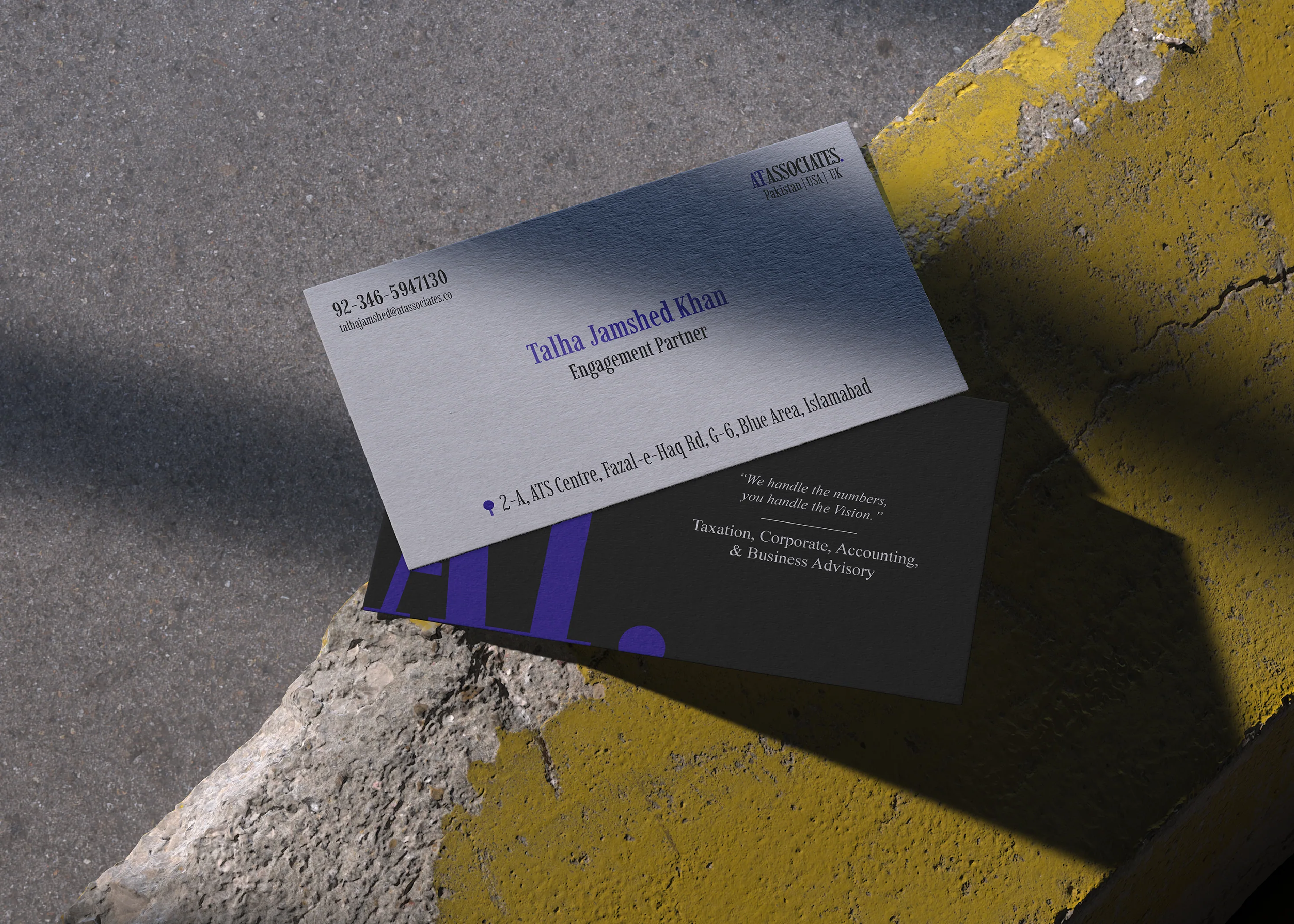
Talha is the COO of AT Associates. Sharp guy. Busy. The kind of person who respects his time and expects you to respect it too.
This was our first meeting. He was filling out a discovery questionnaire. I was walking him through it in design terms. Positioning. Brand differentiation. Visual language systems. The vocabulary I use every day without thinking about it.
Talha stopped me and said something I have not forgotten.
"I don't have any clue what you are talking about."
So I dropped the design talk entirely. Explained what we were actually doing in plain terms. What his target customers needed from him. What we were going to build and why. What results it would drive for his business.
He got it immediately.
Nothing about the goal changed. What changed was the language I used to explain it. I had been speaking designer at someone who needed to hear business.

The philosophy is for you, not for them
This is the distinction most designers miss. Your design philosophy is the work you do behind the scenes to arrive at the right answer. It is not a performance to put on for the client. It is your internal quality control. It is why you make the decisions you make. But the client does not need to sit through your internal monologue to trust the output.
He should trust that you have reasons. He should not need a thirty-slide deck to feel okay about your decisions. If your work cannot stand on its own without an essay attached, the work is not the problem. The presentation is hiding it.
Strong work does not need that much explanation. Weak work hides behind it.
What clients actually respond to
In eleven years of brand identity work, I have presented to founders, CEOs, COOs, marketing directors, and business owners across Pakistan, the Middle East, Asia, and the West. The ones who approved work fastest and with the least friction were never the ones I presented the most rationale to.
They were the ones I spoke to in their own language from the start.
Not "we will develop a cohesive visual identity with a consistent typographic hierarchy" but "we will make sure that every time a potential client sees your business, they immediately understand what you do and why you are the right choice." Same work. Different sentence. One makes the client lean in. The other makes them nod politely and wait for you to finish.
This is not about dumbing it down. It is about respecting their time and trusting your own work enough to explain it in terms that actually land.
What this means practically
Before any design terminology, explain what you are solving. Not the method. The problem. Not the process. The outcome.
Keep it in their language. Not "this typeface communicates trust through its geometric structure" but "this typeface positions you alongside the premium players in your market." Same decision. Different frame. One explains what you did. The other explains what it does for them.
Have your reasons. Know why every decision was made. But do not lead with the reasoning. Lead with what it achieves. The philosophy is yours to carry, not theirs to sit through.
Tell him what problem it solves. Tell him how you are going to get him there. Move on.
That's it. It's simple as that.
If your brand is not doing enough of the talking
A brand identity that needs constant explanation is a brand identity that is not working hard enough. The best ones communicate instantly, to your clients, your partners, and anyone who comes across your business.